George Engel | GE Leadership Group

Leadership is
influence, not position.

You don't need a title to lead. You need influence — and influence is built, not assigned. The Powerless Leader is the framework for everyone who leads without waiting for permission.

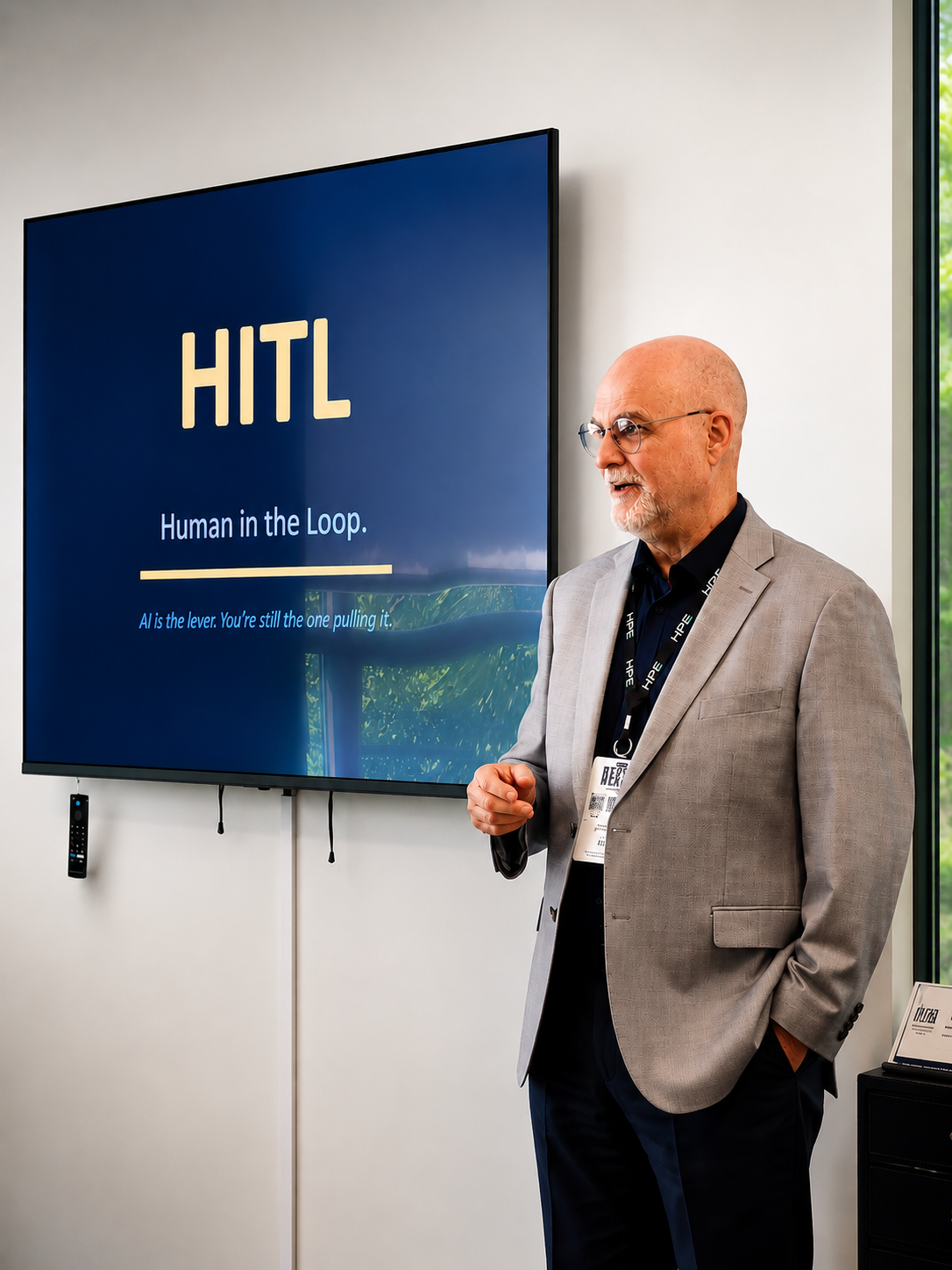
George Engel speaking — The Powerless Leader
The Powerless Leader — Keynote & Workshop
The conviction
"Becoming the kind of leader whose influence makes power unnecessary."

Most leadership development programs are built for people who already have authority. They teach you to manage from the top, lead from position, and leverage your title to drive results.

The Powerless Leader starts from a different premise. Real influence is not granted — it is earned. The leaders with the most lasting impact are rarely the ones with the biggest titles. They are the ones who built trust, modeled integrity, and moved people by the force of who they are, not the power of their position.

This is the conviction behind everything George teaches — from keynote stages to coaching rooms to the upcoming book.

🎯
Influence over authority
You cannot order people to trust you. Influence is built through consistent action, not a job title.
🔄
Leadership is for everyone
If you have ever been told "that's above your pay grade" — this framework was built for you.
📖
Story before system
Every principle in The Powerless Leader is grounded in real experience. Story first, then the framework.
The framework

Three arenas. One framework.

Influence doesn't live in one place. The Powerless Leader organizes leadership development into three interconnected arenas — each one building on the last.

01
First arena
Lead Yourself
You cannot lead others well until you have learned to lead yourself first. This arena is about identity, mindset, and the internal work that makes external influence possible.
  • Identity and self-awareness
  • Emotional intelligence and regulation
  • Personal discipline and integrity
  • Mindset under pressure
02
Second arena
Lead Across
Sideways influence is the most overlooked leadership skill. Leading your peers — colleagues at your level — requires a different set of tools than leading up or down.
  • Peer relationships and credibility
  • Collaboration across teams
  • Sideways influence without authority
  • CLEAR communication with colleagues
03
Third arena
Lead Up
Influencing those above you is not manipulation — it is strategic leadership. Leading up means earning organizational credibility and advocating effectively without undermining authority.
  • Earning organizational credibility
  • Strategic influence without position
  • Advocating for your team and ideas
  • Navigating authority with integrity
The story behind it

Where this started

In the spring of 2020, like millions of others, I found myself staring at a computer screen instead of standing in front of people.

As a teacher, I had spent decades building relationships in classrooms. I could read a student's expression, stop beside a desk, share a quick word of encouragement, and know whether a lesson was connecting. Almost overnight, all of that disappeared. The classroom became a grid of black boxes and muted microphones.

I was working hard, but I felt unseen. I was serving others, but I felt unheard. I was investing in people, but I felt undervalued. There was no dramatic failure. No conflict. Just silence.

Then something shifted. I realized that leadership had never been about recognition. It had always been about influence. My responsibility was simply to show up, serve faithfully, and add value — whether I could see the impact or not.

So I kept teaching. I kept reaching out to students and colleagues. I kept trying to make a difference one conversation at a time.

If your sense of worth depends on being noticed, you will eventually become discouraged. But if your purpose is rooted in serving others, you can continue to lead even when nobody seems to be watching.
A question worth sitting with
"Are you leading for recognition — or for impact?"
What's available

Take The Powerless Leader further

Whether you want to bring the framework to your team or go deeper on your own, there are two ways to engage with The Powerless Leader.

Coming Soon
The Book
The Powerless Leader

The complete framework in print — a three-part journey through Lead Yourself, Lead Across, and Lead Up. Written for everyone who has ever felt their influence was limited by the authority they didn't have.

  • Part I: Lead Yourself — Identity, mindset, and personal discipline
  • Part II: Lead Across — Sideways influence, collaboration, communication
  • Part III: Lead Up — Organizational credibility without position
  • Conclusion: Servant Leadership and the power of powerlessness
Available Now
Keynote & Workshop
Book George to Speak

The Powerless Leader is available as George's signature keynote (45–60 min) or The Powerless Leader Intensive (full day). Teams leave with a personal leadership action plan and a framework they can use the next day.

  • 45–60 minute signature keynote
  • Half-day workshop — deep dive on one arena
  • Full-day Powerless Leader Intensive
  • 100% customized for your audience and sector
Who this is for

You already lead. You need the framework.

The Powerless Leader wasn't built for people at the top of the org chart. It was built for the people doing the actual work of leadership — with or without a title.

Core audience
The Everyday Leader
You lead people, projects, or rooms — but no one gave you a formal title for it. You need a framework that matches the leadership you are already doing.
Teachers Team leads Volunteers Ministry leaders Emerging leaders
Secondary audience
The Middle Leader
You are caught between positions — accountable to those above, responsible for those below, expected to influence in every direction at once. That is not a problem. That is leverage.
Mid-level managers Assistant principals Department heads Nonprofit directors
Emerging audience
The Multi-Gen Leader
You are leading a team that spans generations and the gap between how Boomers and Gen Z experience leadership is real. Generational difference is a leadership opportunity, not a liability.
Multi-gen teams Gen Z managers School administrators Government supervisors